 Rachana Patani
Hair Loss During Peri-Menopause & Menopause
Of all the changes we brace for during menopause, hair loss rarely tops the list.
We expect hot flashes. Maybe some sleep struggles. Even the occasional mood swing that sneaks up out of nowhere. But watching your hair slowly thin—your part line widening, your ponytail shrinking, more strands swirling down the drain—can feel like an unfair surprise.
If this is happening to you, you’re not overreacting, and you’re definitely not alone. Hair loss during peri-menopause & menopause is a common, hormone-driven shift that affects millions of women—and it’s not just physical. It can impact how we feel about ourselves in deep, personal ways.
Hair loss during menopause can feel personal and disorienting—but it doesn’t have to be a mystery. By understanding the hormonal shifts behind the changes and exploring treatments that actually work, you can take meaningful steps toward supporting your hair and your well-being. This guide walks you through it all—with research, empathy, and real-world strategies that meet you where you are.
What Is Perimenopause, and When Does It Start?
Perimenopause is the transition phase leading up to menopause, and it can begin earlier than most people expect—as early as your mid-to-late 30s, but most commonly in the early-to-mid 40s. This phase can last anywhere from a few years to a full decade.
Menopause itself officially begins when you’ve gone 12 consecutive months without a menstrual period, typically between ages 45 and 55. In the U.S., the average age is around 51.
“Many women are surprised to learn that perimenopause can start in their early 40s—or even late 30s,” says Dr. Mary Claire Haver, OB-GYN and founder of The Galveston Diet. “Symptoms like hair thinning, fatigue, sleep disturbances, and irregular cycles often show up long before the final period.”
Perimenopause is a transition, not a switch—and for many, it begins well before they expect it.
Why Am I Losing Hair? Let’s Talk Hormones
As you move through perimenopause and menopause, your hormones begin shifting—dramatically. These changes affect nearly every part of your body, including your scalp and hair follicles.
Here’s what’s going on behind the scenes.
Estrogen and progesterone levels begin to decline. Androgens (like testosterone) may remain stable or become more dominant by comparison. This hormonal imbalance leads to an increase in DHT (dihydrotestosterone)—a powerful androgen that can shrink hair follicles, shorten the growth cycle, and lead to shedding or thinning, especially around the crown and part line.
“Estrogen and progesterone help hair grow faster and stay on the head longer,” explains Dr. Anna Cabeca, OB-GYN and hormone specialist. “When those hormones decline, hair growth slows, and more follicles shift into the shedding phase.”
What Does Menopausal Hair Loss Look Like?
Thinning across the top of the scalp, especially along the part A visible reduction in hair volume or density Dry, brittle texture and more breakage Longer regrowth cycles (it seems like your hair never gets past your shoulders anymore) Increased shedding in the shower, on your pillow, or in your brush
Some women may even notice hair growth where they don’t want it (hello, chin hair), due to the relative rise in androgens. According to the Journal of the American Academy of Dermatology, “Menopausal hair thinning begin years before menopause and it typically presents as diffuse thinning rather than localized baldness.”
What You Can Do
Hair loss during menopause can feel discouraging—but it’s not hopeless. These expert-backed strategies can help restore balance and support healthier hair from the inside out.
Check Your Hormones
Start with bloodwork to check. Consult your primary care provider or OB/GYN to get started. Some key hormone that you provider might check include,
-
Estrogen (including estradiol, a main form of estrogen)
-
Progesterone
-
Testosterone and DHEA
-
Thyroid function (TSH, T3, and T4)
Doctors often check FSH (follicle-stimulating hormone) and estradiol to help diagnose menopause. During menopause, FSH levels tend to increase as the ovaries become less responsive and Estradiol levels tend to decrease.
However, during perimenopause, these hormone levels can fluctuate significantly, making it challenging to interpret results from a single test.
Explore Medical and Over-the-Counter Treatments
When hair loss feels overwhelming, medical treatments can offer targeted support. These options aren’t one-size-fits-all, but many women find them effective when paired with a comprehensive approach.
Here are some of the most commonly recommended treatments:
-
Minoxidil (Rogaine): FDA-approved for women, this topical treatment works by increasing blood flow to hair follicles, helping to extend the growth phase and reduce shedding.
-
Spironolactone: An oral medication that blocks DHT, the hormone responsible for shrinking hair follicles and causing thinning.
-
Platelet-Rich Plasma (PRP): A natural therapy where your own blood plasma, rich in growth factors, is injected into the scalp to stimulate hair regrowth.
-
Low-Level Laser Therapy (LLLT) / Red Light Therapy: This noninvasive treatment uses red or near-infrared light to stimulate hair follicles and promote growth. It increases cellular energy in the scalp, helping follicles shift back into the active growth phase.
- Hair Vitamins like Viviscal
LLLT is FDA-cleared for treating pattern hair loss in both men and women. It’s considered safe, painless, and suitable for long-term use—especially in the early stages of thinning.
“Red light therapy is especially helpful for early stages of hair thinning,” says Dr. Maryanne Senna, dermatologist and hair loss researcher at Massachusetts General Hospital. “It’s safe, noninvasive, and a great option for women who want to avoid or supplement medications.”
Popular FDA-cleared at-home devices include:
These devices are typically used a few times a week for 15–30 minutes, and while results vary, many users see noticeable improvement in density and reduced shedding within 3 to 6 months.
Scalp Health is Everything
Healthy hair starts at the scalp. If your scalp isn’t in good shape, it’s tough for hair to grow strong and last long.
Focus on nourishing and protecting your scalp with gentle but effective care:
-
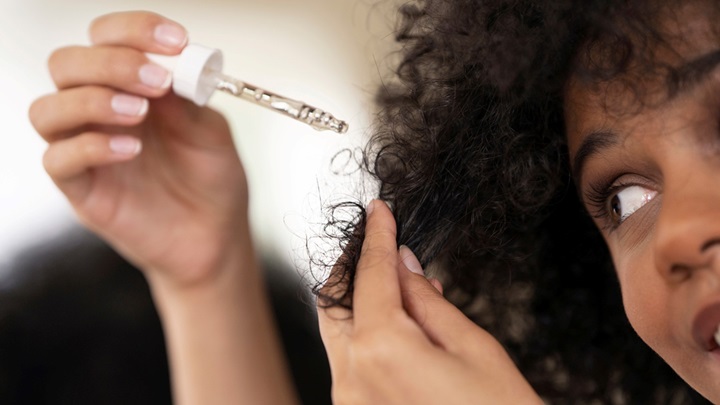
Choose shampoos and treatments containing ingredients like rosemary oil, caffeine, peptides, or niacinamide, which help stimulate circulation and strengthen follicles.
-
Avoid harsh chemicals such as sulfates, alcohols, and parabens that can dry out or irritate your scalp.
-
Try regular scalp massages—using your fingertips or a soft brush—to boost blood flow and help topical treatments absorb better.
Feed Your Hair from Within
What you eat shows up in your hair’s health. Hair is mostly made of keratin, a protein that needs steady nourishment.
Supporting your hair from the inside out means:
-
Eating plenty of protein-rich foods like eggs, fish, lentils, and Greek yogurt.
-
Considering supplements with biotin, vitamin D, zinc, iron, and omega-3 fatty acids to fill any nutritional gaps.
-
Staying well-hydrated—remember, a dry scalp isn’t a strong foundation for hair.
Stress Management is Key (Easier Said Than Done, I Know!)
It’s not just about “calming down”—it’s about building routines and rituals that help your nervous system reset and your hormones recalibrate. Here are a few proven ways to reduce cortisol and support both your body and your hair:
-
Gentle movement, like walking, stretching, or yoga, helps regulate stress hormones and improves circulation.
-
Meditation and breathwork calm the mind and shift your body out of fight-or-flight mode. Even 5–10 minutes a day can make a difference.
-
Journaling, therapy, or talking with a trusted friend allows you to process emotions instead of holding them in your body. And yes—sometimes a good cry is more healing than we give it credit for.
Smarter Styling Makes a Big Difference
Get a haircut that adds movement and volume—layering can visually thicken your look Use volumizing powders or root lifters Avoid tight ponytails, frequent heat styling, and rough towel-drying
It’s Not Just Hair—It’s Identity, Confidence, and Control
You’re not imagining things. Perimenopausal hair loss is real—and it can affect how you see yourself. It’s okay to feel frustrated or even grieve the loss of the hair you once had. But it’s also empowering to know that this isn’t something you have to just “deal with.”
There are proven solutions. There are ways to restore not only your hair but your confidence. And remember, this phase of life is not about fading—it’s about evolving.
As Maya Angelou said, “We may encounter many defeats but we must not be defeated.”
Don’t let hair loss be one of those defeats.
So here’s the truth: You’re not simply losing your hair. You’re shedding what no longer serves you—and growing into a stronger, wiser version of yourself. This isn’t an ending; it’s your power unfolding.